
CDC Website

English

Mermin on Social Determinants of Health

NCHHSTP is committed to promoting awareness, engagement, and action on the many factors that can affect the health of all persons, and to addressing these factors in our policy, practice, research, and partnership activities. In support of this commitment, we created a series of brief videos featuring our leaders speaking about the importance of addressing SDOH throughout the Center. The videos include their personal commitment to achieving health equity with a focus on the diseases and infections we work so hard to prevent.
HIV Data Best Practices Webinar Series

The webinar series focused on best practices and strategies for effectively using HIV data for successful programmatic and systematic outcomes in state, local, territorial, and tribal (STLT) health departments. The first webinar focused on data reporting to multiple funding streams. The second webinar covered how to use surveillance data to inform HIV programs. The final webinar was an interactive and engaging session for EHE jurisdictions to discuss best practices for completing CDC-PS20-2010 activities. 

Re-envisioning Community Engagement: A Practical Toolkit to Empower HIV Prevention Efforts with Marginalized Communities

Re-envisioning Community Engagement: A Practical Toolkit to Empower HIV Prevention Efforts with Marginalized Communities walks through the foundational concepts and principles that shape community engagement within HIV prevention and care. With the identified goals of the Ending the HIV Epidemic in the U.S. (EHE), it is crucial for EHE jurisdictions, health departments, and community organizations to effectively engage communities within the process. Community engagement applies to different communities and regions.

Image:
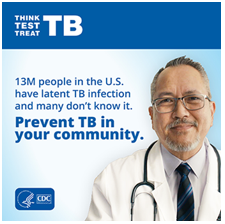
Think. Test. Treat TB Campaign. Go to campaign website
Date Created:
Centers for Disease Control and Prevention

Tuberculosis (TB) is one of the world’s leading infectious disease killers, and it is both contagious and deadly. Up to 13 million people are living with latent tuberculosis infection in the United States. Without treatment, 5-10% will develop into TB disease. Yet, the notion that TB is no longer a...