



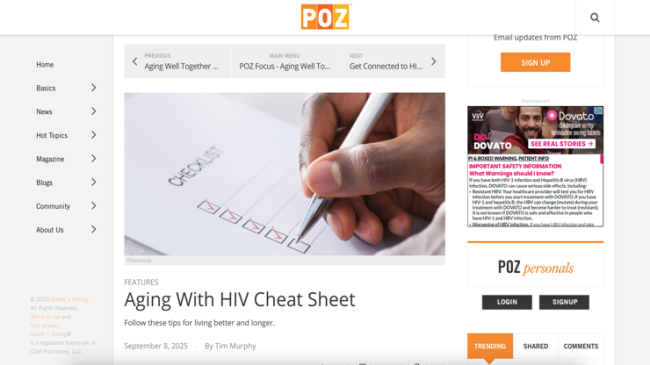
The “Aging With HIV Cheat Sheet” provides practical, research-informed guidance for people living with HIV who are growing older — reflecting that many people with HIV now live well into middle age and beyond. It recognizes that as people with HIV age, their health needs evolve — combining general aging challenges with HIV-specific risks.
Why aging with HIV matters more now:
• In the U.S., more than half of people living with HIV are now aged 50 or older.
• Advances in HIV treatment mean that many people live long, relatively healthy lives — but that longevity brings age-related risks (heart disease, bone loss, cancers, other comorbidities) that may occur earlier or more frequently than in HIV-negative peers.
The article (and related HIV + aging literature) highlights several health issues that people aging with HIV should watch out for:
• Cardiovascular disease: Ongoing inflammation and immune activation in people with HIV may accelerate atherosclerosis and increase risk of heart attacks or strokes.
• Cancer risk: Both AIDS-related and non–AIDS cancers (e.g. lung, liver, anal, certain lymphomas) appear more often in older people with HIV — making regular cancer screening especially important.
• Bone health issues: Lower bone-mineral density / higher risk of osteoporosis and fractures than general population, making bone-density screening (e.g. DEXA scan), calcium/vitamin D, and preventive care more critical.
• Anemia, metabolic disorders, organ system stress: Issues such as anemia, kidney or liver disease, diabetes risk, and other metabolic changes are more common — especially when combined with aging.
• Cognitive decline, hearing/vision changes, mental-health concerns: As with aging generally, but possibly exacerbated by HIV — making regular checkups and mental/ neurological care important.
The article lays out strategies and habits — a “cheat sheet” — for aging healthily with HIV:
- Stay on prescribed HIV treatment: Consistent antiretroviral therapy remains essential. Also, share full list of all medications / supplements you take with your provider — to avoid harmful drug interactions.
- Get regular, comprehensive health screenings: Beyond HIV-specific labs: monitor heart health (cholesterol, blood pressure), bone density, kidney/liver function, cancer screening, metabolic issues — basically treat care like general aging care.
- Take care of physical and mental wellbeing: Balanced diet, regular exercise, strength training, bone-health practices; monitor hearing, vision; check for depression or other mental-health concerns; stay socially connected.
- Address stigma and social support needs: Aging with HIV may come with dual stigma — HIV + aging. Finding peer-support networks, mental-health counselors, or supportive communities can make a real difference.
- Be proactive & informed: Recognize that living with HIV + aging is qualitatively different than simply getting older. Being informed, vigilant, and working with healthcare providers is key.
The “Aging With HIV Cheat Sheet” reframes aging with HIV not as a tragedy but as a stage of life needing attention, planning, and proactive care. It reminds us that many people with HIV now have decades ahead — and that combining HIV care with general preventive health can increase not just lifespan, but quality of life.
- At Risk Persons
- General Public
- HIV and AIDS
- Adults
- HIV
- Treatment- Medication Information